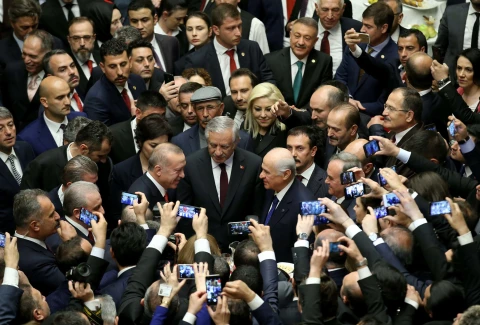
Change of Game in Turkish Politics: The New Political Blocs
Centralizing and de-centralizing dynamics existing side-by-side create a complex situation for the present and future of Turkish politics.

Centralizing and de-centralizing dynamics existing side-by-side create a complex situation for the present and future of Turkish politics.

Since there is less than 24 hours left to Turkey's local elections, it is crucial to discuss possible future scenarios that may occur after the results are displayed. Which dynamics will be effective in the post-election period in Turkey and will these dynamics be determinant on national and international political issues?
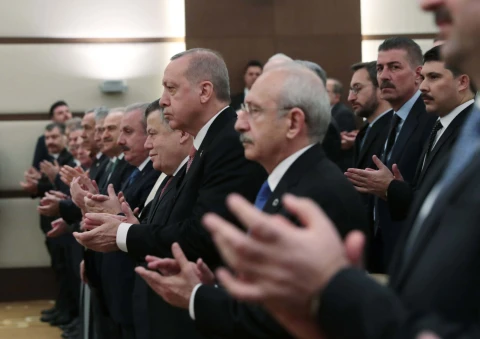
While the People’s Alliance refers itself to a set of compatible ambitions and narratives, the Nation Alliance is based on incompatible narratives and only has one common objective – to get rid of President Erdogan.
Kilicdaroglu is said to have decided the name for Istanbul: Ekrem Imamoglu – the current lead of Beylikduzu. Therefore, Aksener has not much to do with the candidate of Istanbul. According to Selvi, the race for Istanbul will be between Binali Yildirim and Ekrem Imamoglu.
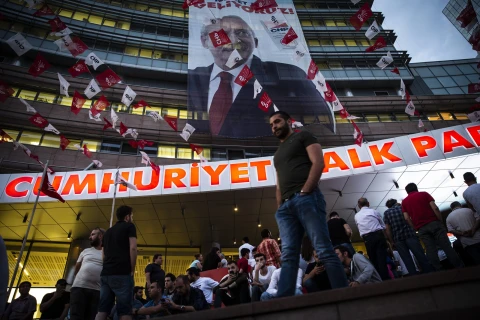
How will the opposition bloc in Turkey manage to form a balance between their ideological orientation and their interests? The answer to this question reflects the main crisis within this bloc.
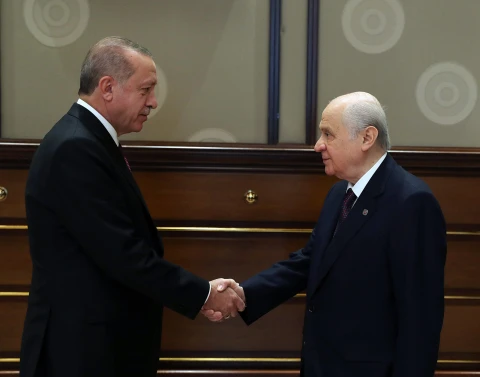
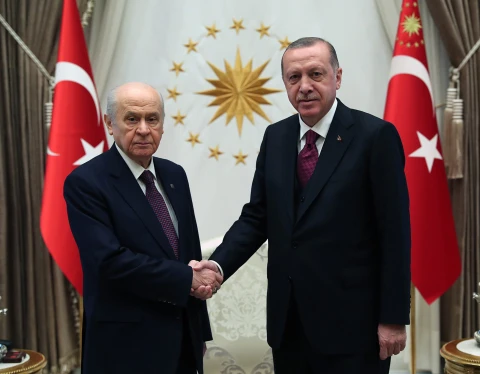
The leader of MHP, Devlet Bahceli, stated that the MHP would not nominate its own candidates in Istanbul, Ankara, and Izmir, the most critical provinces for the People’s Alliance, and that the MHP would support the AK Party candidates in these provinces. Thus, the People’s Alliance has once again emerged as a game changer in Turkish politics.
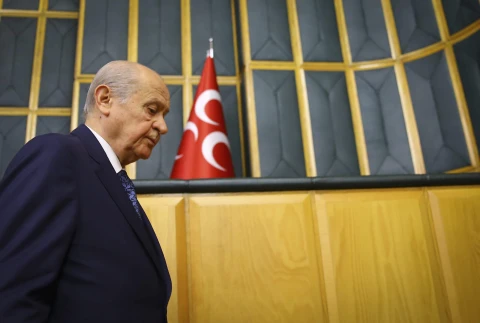
If the AK Party and the MHP are able to balance between “being rivals” in the local elections and “being partners” in the parliament, the People’s Alliance will continue to contribute to the solution of Turkey’s serious problems in the future.
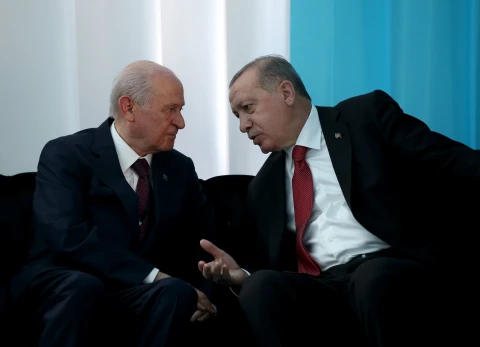
What makes the upcoming local elections more important than a simple vote to determine local administrators is the fact that the opposition is trying to make it ‘a referendum vote’ for the Turkish government. And this effort may lead to the most critical stage of a struggle in voter sociology, which has been long ongoing.
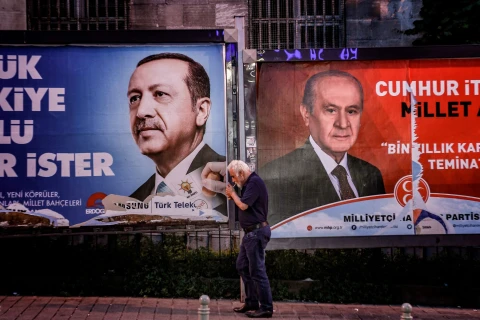
It is too early to talk about the future of the People’s Alliance. However, it is fair to state that unless the conditions that had formed the Alliance change, it will maintain its existence with periodical fluctuations.

In the “Old Turkey,” to use the term coined by the AK Party, courts often examined the “aptness” of government decisions and acted as if they were opposition parties, banning certain behavior. It has been a long time since this situation was named “judicial tutelage” and many efforts were made to end it.
Many would bet for a victory for Erdogan but with a divided parliament, which will make politics quite hot for the following months in terms of the relations between the executive and legislative branches.