The Erosion of European Political Consensus: The 2026 Elections
The 2026 elections have shown that the erosion of European political consensus is a far more complex process than can be explained solely by the rise of the far right.

The 2026 elections have shown that the erosion of European political consensus is a far more complex process than can be explained solely by the rise of the far right.

Could the European Union project, developed to reform Europeans’ racist and war-prone tendencies, have been rejected by the very societies it was intended to transform?
European countries and Canada are expected to spend about $634 billion on core defense requirements this year, an increase of 11% from 2025.

A central issue in the election has been the growing influence of the Sweden Democrats, a far-right party whose roots include neo-Nazi and white supremacist movements in the 1980s.

The Hungarian elections demonstrate that the sustainability of post-liberal politics in the new era hinges on three fundamental, interlinked conditions.

With 87.2% of ballots counted as of 9:50 a.m. local time (0650 GMT), Progressive Bulgaria had secured 44.6% of the vote, maintaining a substantial lead over its rivals.
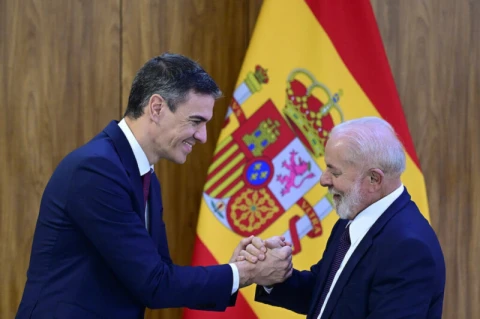
The gatherings are spearheaded by Spain’s Prime Minister, Pedro Sánchez, and Brazil’s President, Luiz Inácio Lula da Silva, who are co-hosting a series of high-level meetings bringing together political leaders, activists, and civil society representatives.
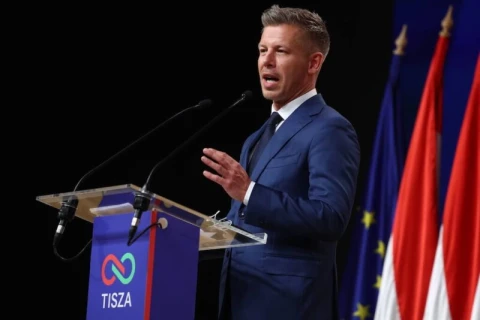
Orbán’s defeat is also being closely watched in Israel, where Prime Minister Benjamin Netanyahu has long counted the Hungarian leader among his closest European allies.

One of the theses Bannon has advocated in the past is that Christian thought is dead in Europe and Islam is on the rise.

The United States and Russia are the only remaining powers in a depleted Europe.

Tensions flared after a U.S. national security strategy released in December warned that European migration trends and political choices could leave the continent “unrecognizable” within decades.

In Portugal, Ventura, leader of the anti-establishment Chega (“Enough”) party, has surged in recent years and heads the second-largest force in parliament.
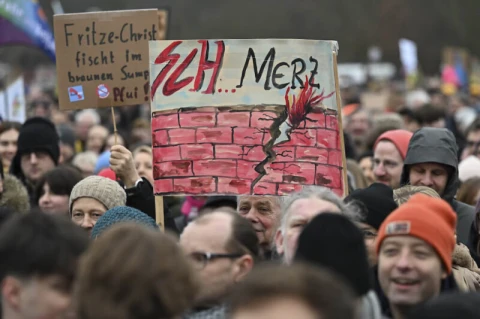
In Europe, populist parties such as the AfD position themselves not as nationalist parties looking to the past, but rather as parties focused on the future.

The European Union is struggling with the Russian threat and the energy crisis, and is trying to make Europe independent of the US.

Fico criticized Brussels for attempting to "punish" Hungary over its stance on funds for Ukraine.

The proposed legislation, dating back to 2018, was part of a series of laws presented by Wilders that aimed to restrict what he labeled as "Islamic expressions."

According to an initial exit poll, Wilders Party for Freedom (PVV) is expected to secure around 35 of the 150 seats in parliament, which is more than double the number they won in the previous election in 2021.

Eurowhiteness may come off as unpalatable to many pro-Europeans, but it raises valuable questions about the place of culture and race in the European project.